
Edibles
Kawakawa
Piper excelsum
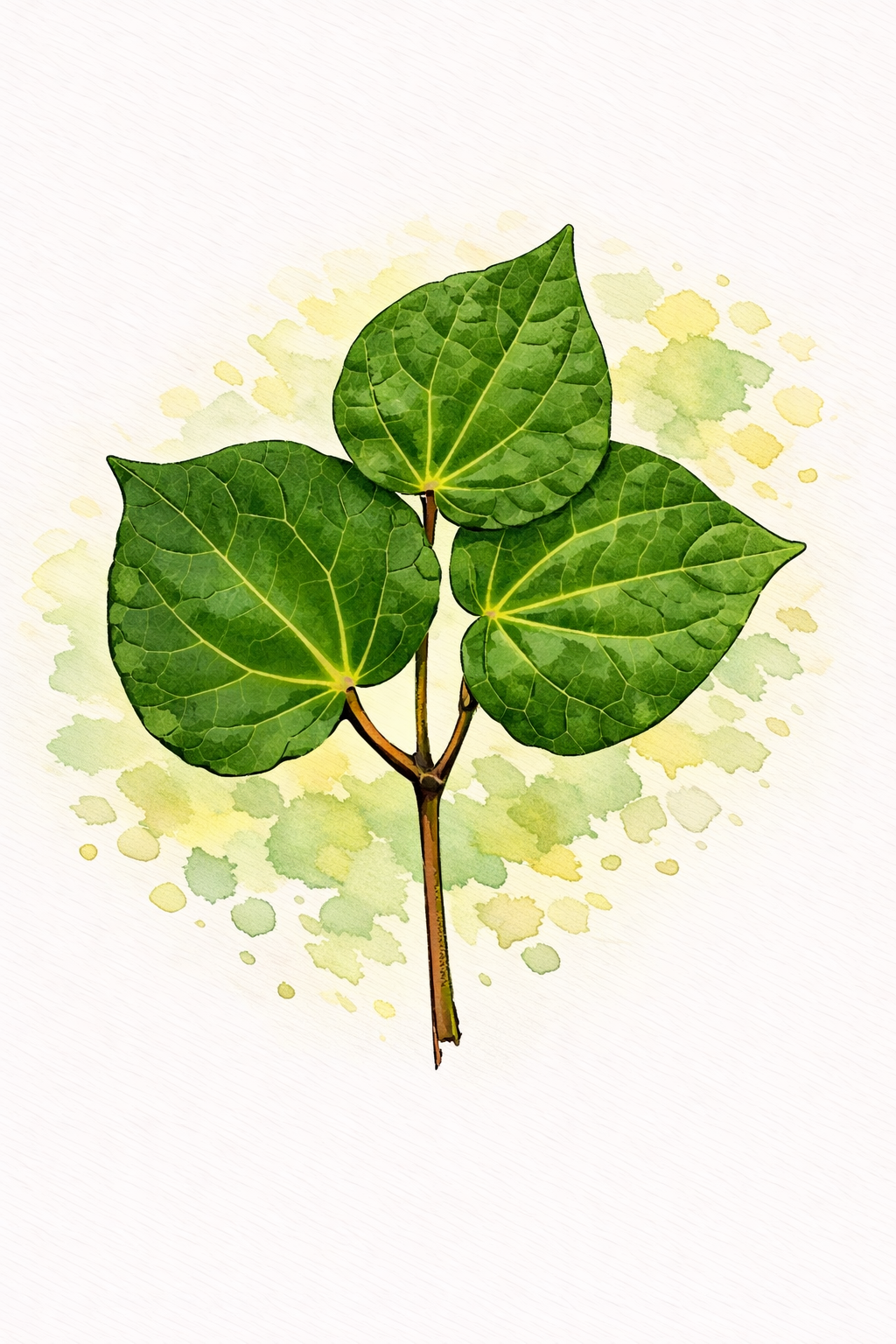
(kawa = ‘bitter’, referring to the taste of the leaves)
The large, heart-shaped deep green leaves are peppery to taste, sub-tropical looking and found throughout the North Island, Te Ika-a-Māui. It is traditionally worn as a wreath at tangis.
Leaves are included in boutique commercial teas and are a staple in rongoā Māori (medicinal use) as an infusion or tea or chewed (like Horopito). Traditionally, leaves with holes are harvested, as these are likely to have a higher concentration of beneficial compounds (the chemicals deter insect browse). The holes are made by the caterpillars of several moths, including the Kawakawa looper Cleora scriptaria, which comes out at night to feed on young leaves, undeterred by the chemicals the plants produce. During the day, caterpillars lie flat to look like a part of the leaf edge or leaf vein. Please don’t use the offshore varieties – they may be bigger and shinier, but don’t tend to be a host for the caterpillars. The large yellow to orange berries of kawakawa are a treat, but you have to get in early to beat the blackbirds – or kereru.
Piper excelsum (Auckland Botanic Gardens website)
Foraging: kawakawa | RNZ is an interview by Jamie Morton talking about foraging leaves with Johanna Knox